
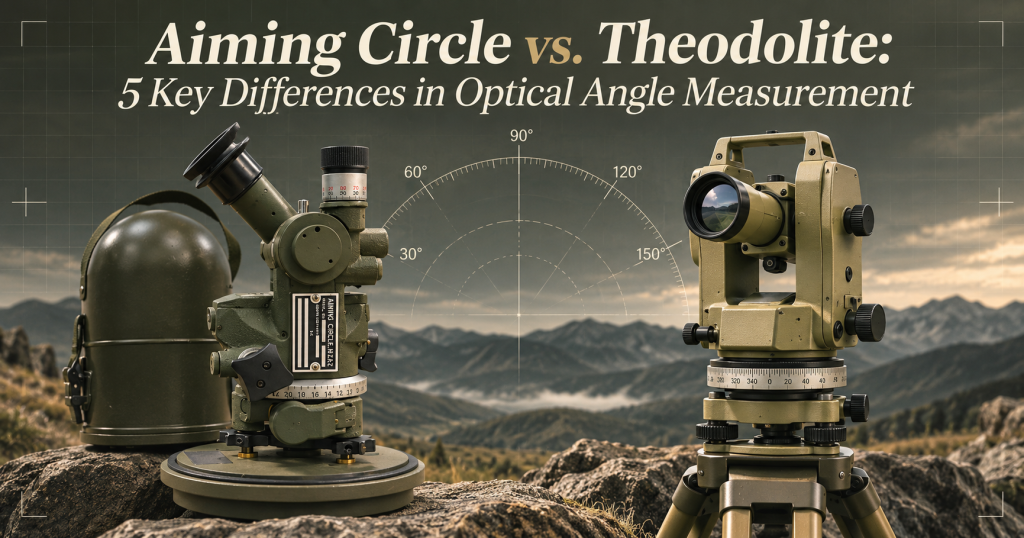
An aiming circle and a theodolite both measure horizontal and vertical angles, but differ in optical design, applications, and equipment requirements.
The M2A2 aiming circle is primarily associated with military surveying, while theodolites are widely used in construction and civil engineering. This guide compares five key differences to help engineers and procurement professionals select the right optical measuring instrument.
What Is the Difference Between an Aiming Circle and a Theodolite?
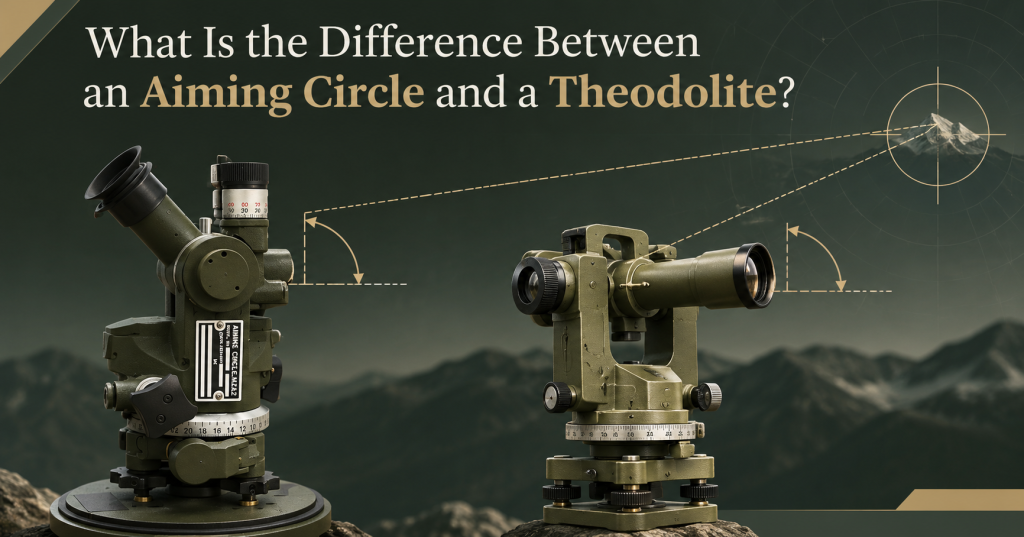
The main difference between an aiming circle and a theodolite lies in their applications and instrument design.
The M2A2 aiming circle is primarily associated with military surveying and field orientation, while theodolites are commonly used in construction, land surveying, and engineering. Both measure horizontal and vertical angles but differ in their optical systems and equipment configurations.
Aiming Circle vs. Theodolite: Quick Comparison
| Feature | Aiming Circle (M2A2) | Theodolite |
| Primary Application | Military surveying | Civil surveying and engineering |
| Optical System | Elbow-type telescope | Surveying telescope |
| Reading System | Mechanical graduated scales | Optical or electronic |
| Equipment | M24 tripod and dedicated accessories | Surveying tripod and model-specific accessories |
| Selection Focus | Model and equipment compatibility | Measurement accuracy and application |
5 Key Differences Between an Aiming Circle and a Theodolite
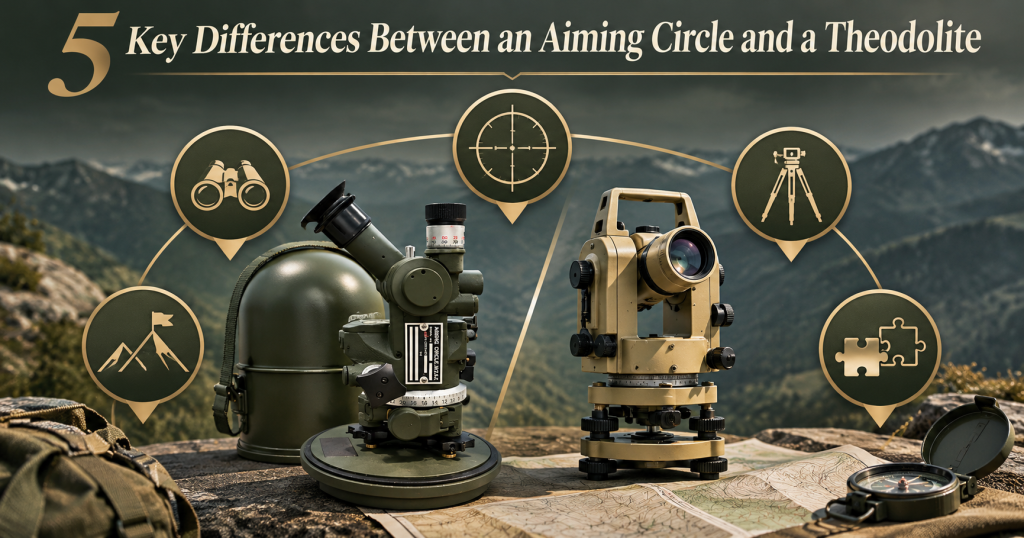
1. Primary Function and Application
The M2A2 aiming circle is designed for specialized military surveying and field orientation. In contrast, theodolites are used for construction layout, land surveying, and geodetic measurements.
Instrument selection depends on the intended application and technical requirements.
2. Optical System and Mechanical Design
The M2A2 uses an elbow-type telescope with an internal reticle and mechanical measurement components.
Traditional theodolites feature rotating telescopes, while modern electronic models may include digital angle displays.
3. Angle Measurement and Accuracy
Both instruments measure horizontal and vertical angles, but their reading systems differ.
The M2A2 uses mechanical graduated scales, while theodolites may provide optical or electronic readings. Measurement accuracy and resolution should be compared using documented specifications.
4. Equipment Configuration and Accessories
The OPTIS M2A2 configuration includes an M24 tripod, M51 instrument light, and accessory kit.
Theodolites typically use surveying tripods and model-specific accessories. Buyers should verify the complete equipment package before ordering.
5. Procurement and Compatibility Requirements
M2A2 procurement focuses on equipment identification, part numbers, and configuration compatibility.
Theodolite selection emphasizes measurement specifications and surveying applications.
Although both instruments measure angles, they are not automatically interchangeable. Buyers should confirm technical requirements before selecting an alternative.
Which Instrument Is Better for Your Application?
Choosing between an aiming circle and a theodolite depends on your measurement requirements, equipment compatibility, and intended application.
Choose an Aiming Circle When:
- Specialized military surveying or field orientation is required.
- Replacement equipment must match an existing M2A2 configuration.
- Procurement specifications require designated components and accessories.
Choose a Theodolite When:
- The application involves land surveying, construction, or civil engineering.
- Electronic angle measurement is preferred.
- Compatibility with surveying workflows is essential.
Can a Theodolite Replace an Aiming Circle?
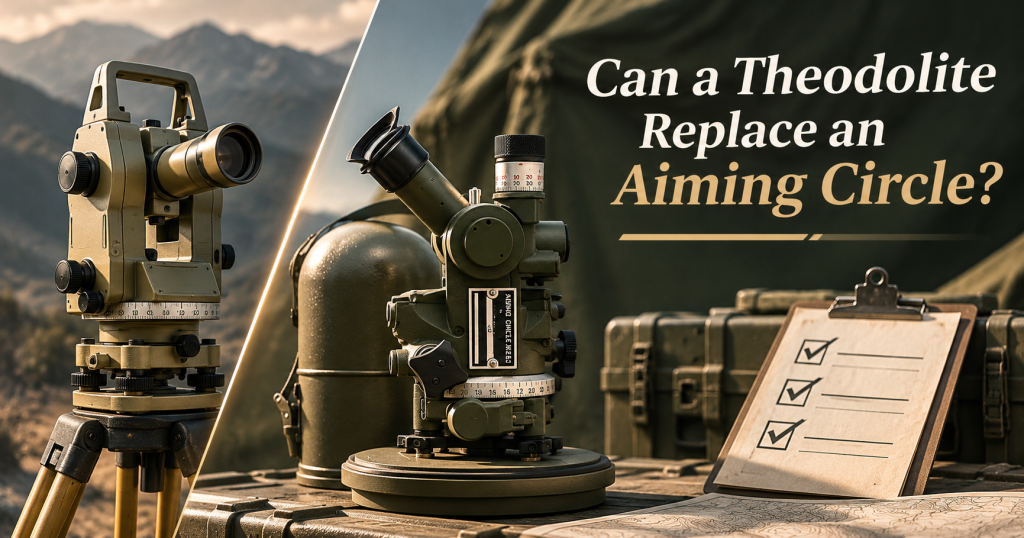
Although both instruments measure horizontal and vertical angles, they are not directly interchangeable.
A theodolite may serve as an alternative for general angular measurement if it meets the project’s specifications. However, applications requiring an M2A2 aiming circle may have specific equipment and compatibility requirements.
Before considering a replacement, verify:
- Measurement Performance: Angular accuracy, resolution, and measurement range.
- Equipment Compatibility: Optical design, mechanical configuration, and accessories.
- Technical Compliance: Product identification, inspection records, and applicable specifications.
What to Check Before Buying an Optical Measuring Instrument
Whether purchasing an aiming circle or a theodolite, buyers should evaluate the following factors:
| Evaluation Factor | What to Verify |
| Application | Intended measurement requirements |
| Accuracy | Angular accuracy and resolution |
| Optical & Mechanical Design | Telescope configuration, stability, and compatibility |
| Accessories | Tripod, instrument light, and supporting components |
| Documentation | Product identification and technical records |
A clear technical specification helps suppliers identify suitable equipment and reduces procurement risks.
Further Reading: Aiming Circle Optics and Reticle Design
Explore circular reticle designs, optical applications, and OEM manufacturing considerations to gain a broader understanding of precision optical systems.
Aiming Circle Explained: Types, Applications, and OEM Manufacturing Solutions
Explore the M2A2 Aiming Circle from OPTIS
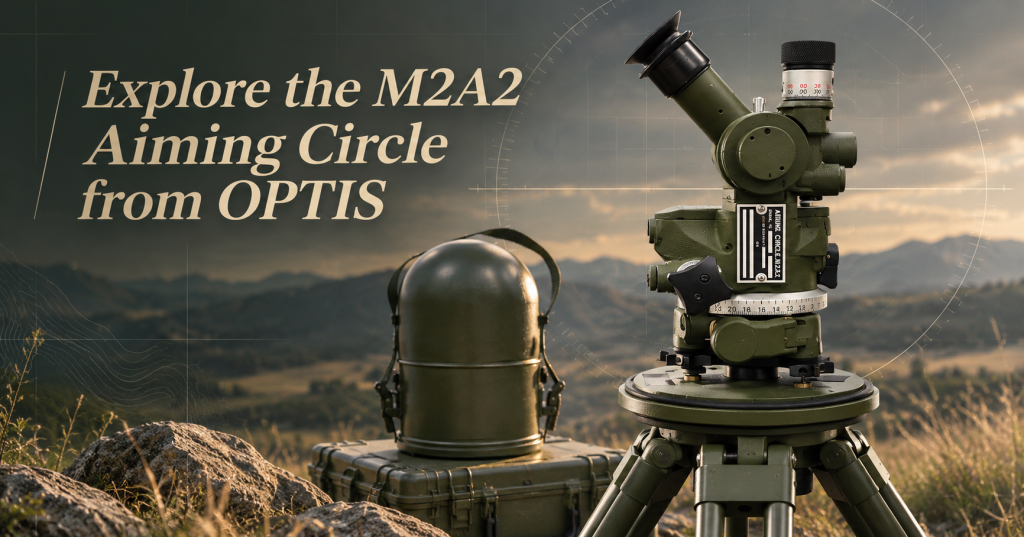
OPTIS TECHNOLOGY CO., LTD. provides product information for the M2A2 aiming circle, including its technical identification and associated equipment configuration.
Explore the available specifications and accessories to evaluate your optical instrument requirements.
Discover OPTIS M2A2 Aiming Circle — View Specifications & Request a Quote
Aiming Circles and Theodolites FAQs
Q1: Is an aiming circle a type of theodolite?
An aiming circle shares optical and angular measurement principles with traditional theodolites. However, the M2A2 is a specialized instrument with a distinct configuration and application.
Q2: Which is more accurate, an aiming circle or a theodolite?
Accuracy depends on the specific model, measurement resolution, calibration, and technical specifications. Neither instrument category is inherently more accurate.
Q3: Can both an aiming circle and a theodolite measure vertical angles?
Yes. Both instruments support horizontal and vertical angle measurement, although their reading mechanisms and specifications differ.